
Tove Jansson’s frescos
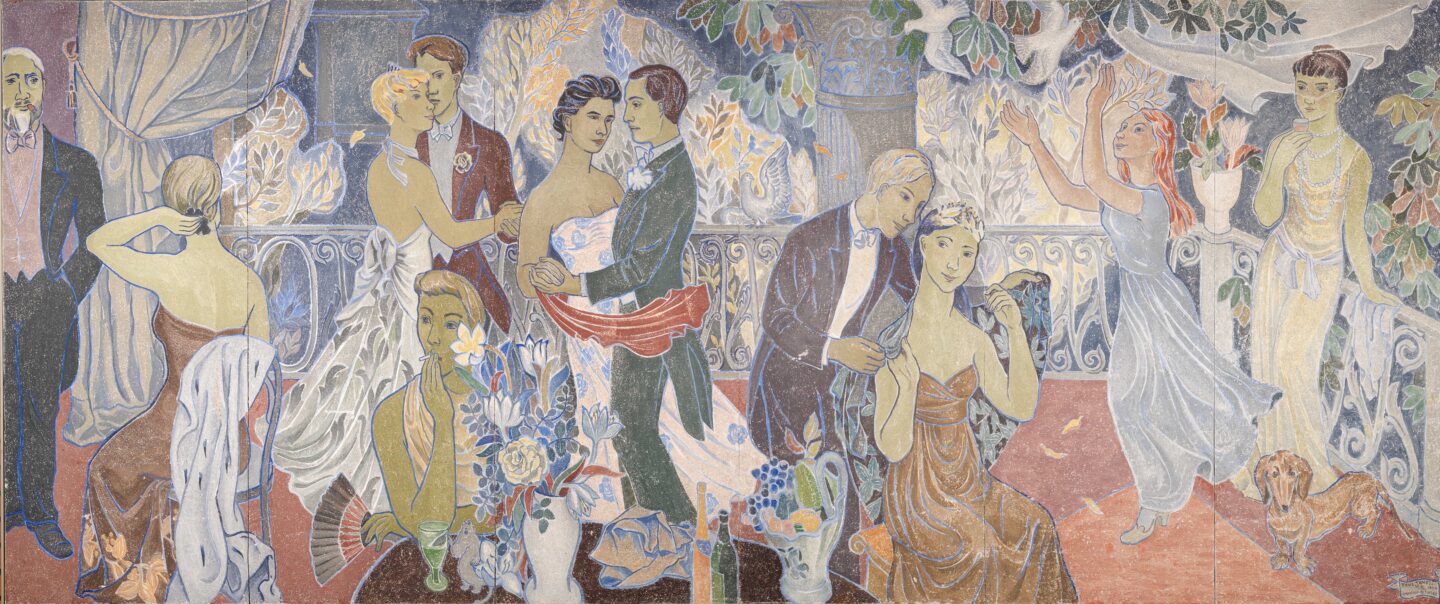
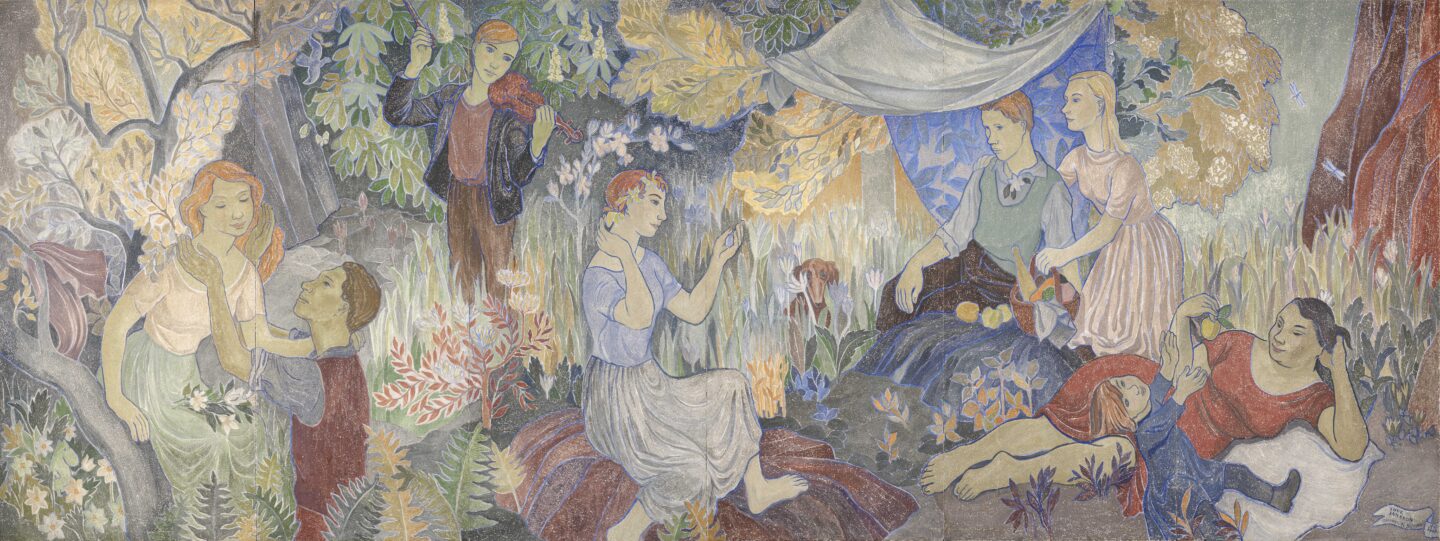
Tove Jansson’s frescos Party in the Countryside (1947) and Party in the City (1947) are part of HAM’s collection and permanently on display in the museum.
Helsinki City Hall’s new canteen and formal restaurant facility, Kaupunginkellari, opened in 1947. Tove Jansson was commissioned to “decorate its walls”, as was the custom at that time. The commissioner was Deputy Mayor Erik von Frenckell, father of Tove’s good friend and theatre manager Vivica Bandler.
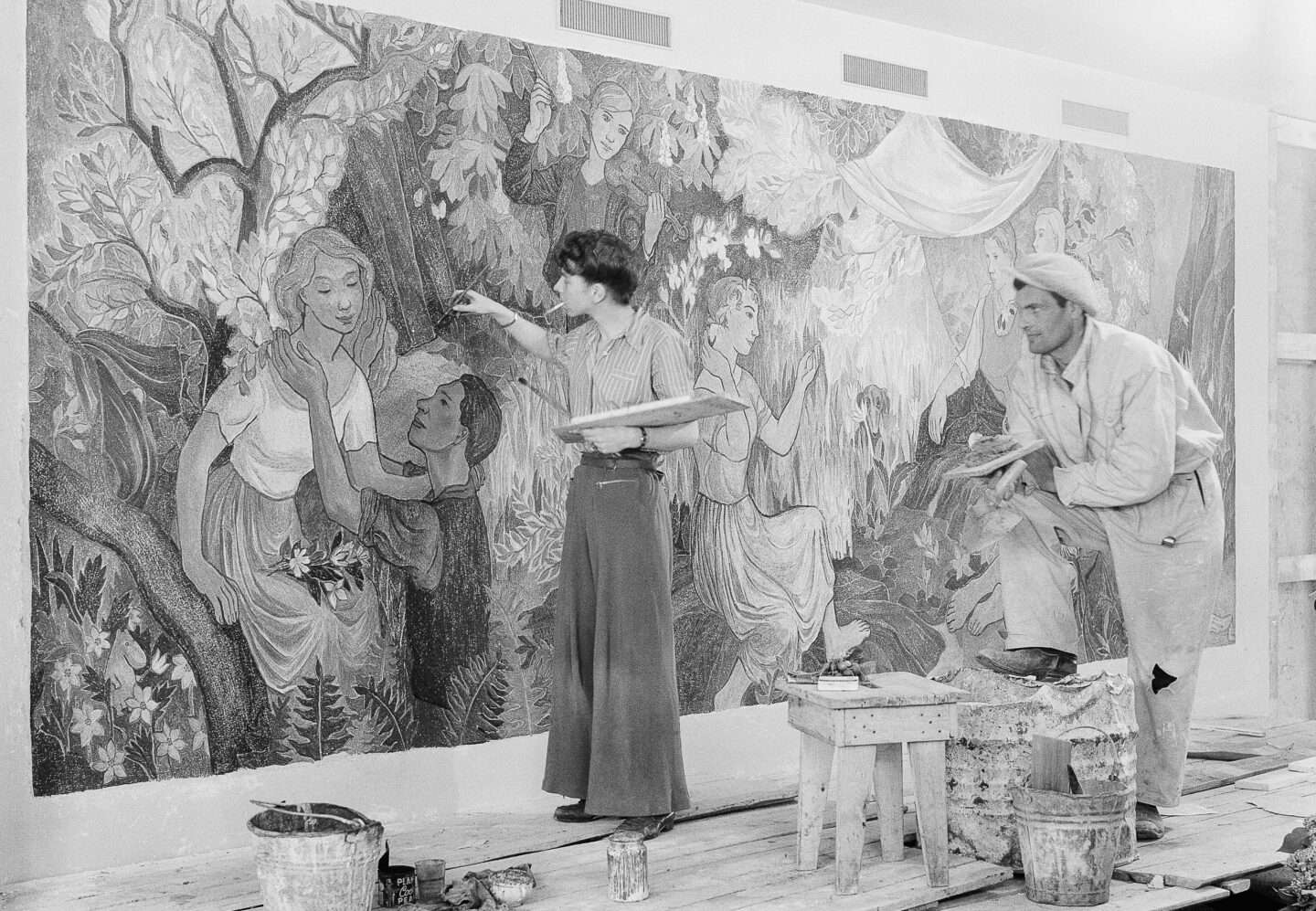
For the commission, Jansson drafted two large, party-themed wall paintings. After the drafts were approved, Jansson finished the paintings in just six months. Niilo Suihko, who had studied fresco painting in Italy, assisted her at the beginning. Both Party in the Countryside and Party in the City are a combination of the fresco and al secco techniques, and Tove’s father, sculptor Viktor Jansson, was involved in developing their technical implementation.
Tove Jansson’s former teacher, the painter Johannes Gebhard, advised her to mount the City Hall frescoes in flat metal frames to enable them to be detached from the wall if this ever proved necessary. This turned out to be a golden piece of advice, as the frescoes were relocated to the lobby of the Arbis Swedish-language adult education centre in Töölö in the 1970s, and later to HAM Helsinki Art Museum in the Tennis Palace in the 2010s.
Today, the frescos are part of HAM’s collection and they are permanently on public display.
Tove Jansson’s art often drew inspiration from her own life and those around her. There are many identifiable figures in Party in the City, including the artist herself, her lover Vivica, and various acquaintances. In both the City Hall frescos, Jansson embedded a Moomin-like figure among the flowers, which was reportedly a special request from the client, Erik von Frenckell. Moomin characters thereafter began popping up regularly in Jansson’s other public paintings as well.
“I know I am living more full-bloodedly than ever and perhaps this last fresco will be the best thing I have done, in spite of – or thanks to – how it weighs on me. And if I don’t rise to the ambitions I have for it, then that will come later.” – Tove Jansson in a letter to Vivica Bandler in 1947
Tove Jansson (1914–2001) was an artistic multi-talent. She was an artist, writer, cartoonist, illustrator and scriptwriter, best known as the creator of the Moomins. In addition to the frescos, HAM also presents other works by Tove Jansson in the renewed Tove Jansson Gallery.