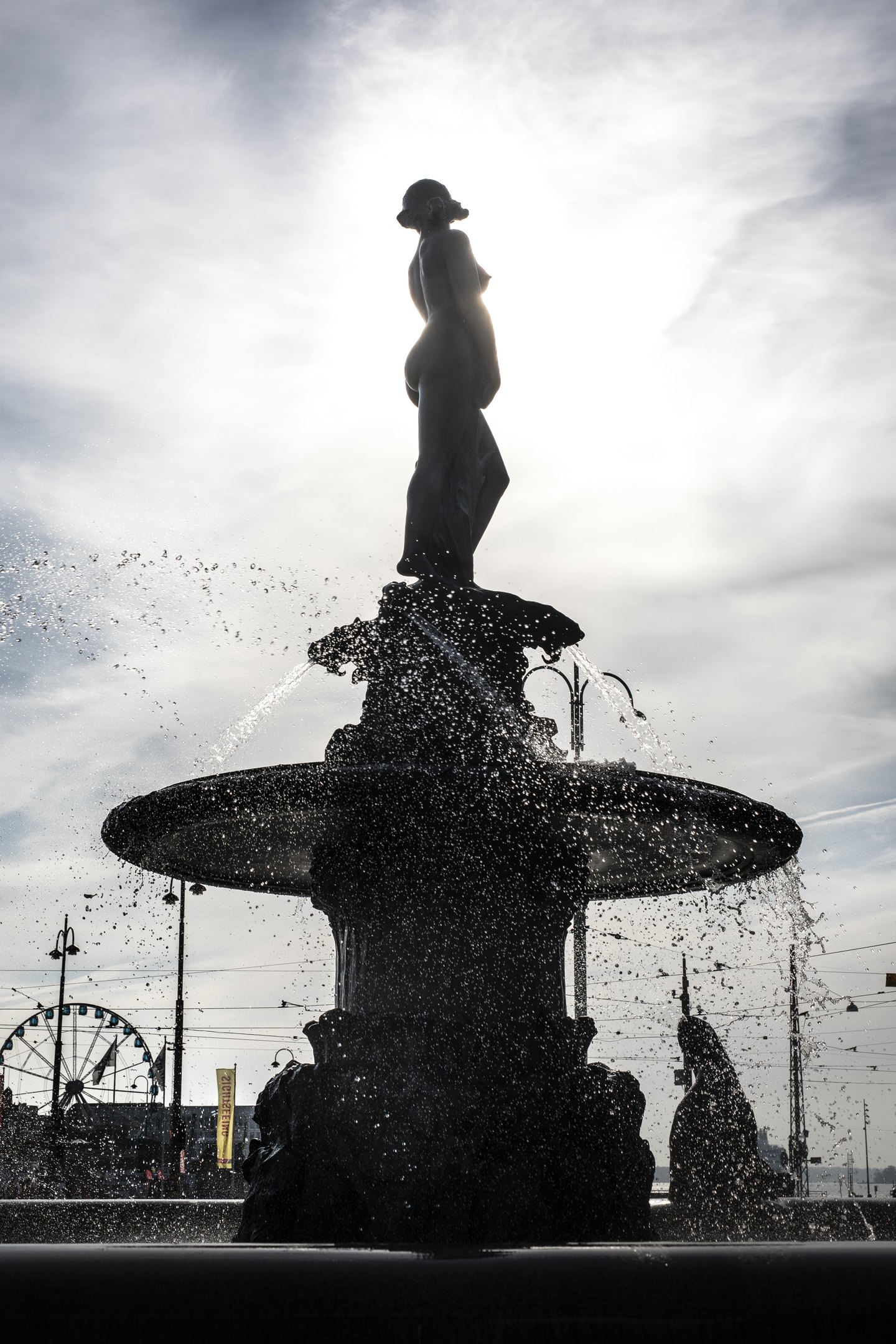
The Story of Havis Amanda
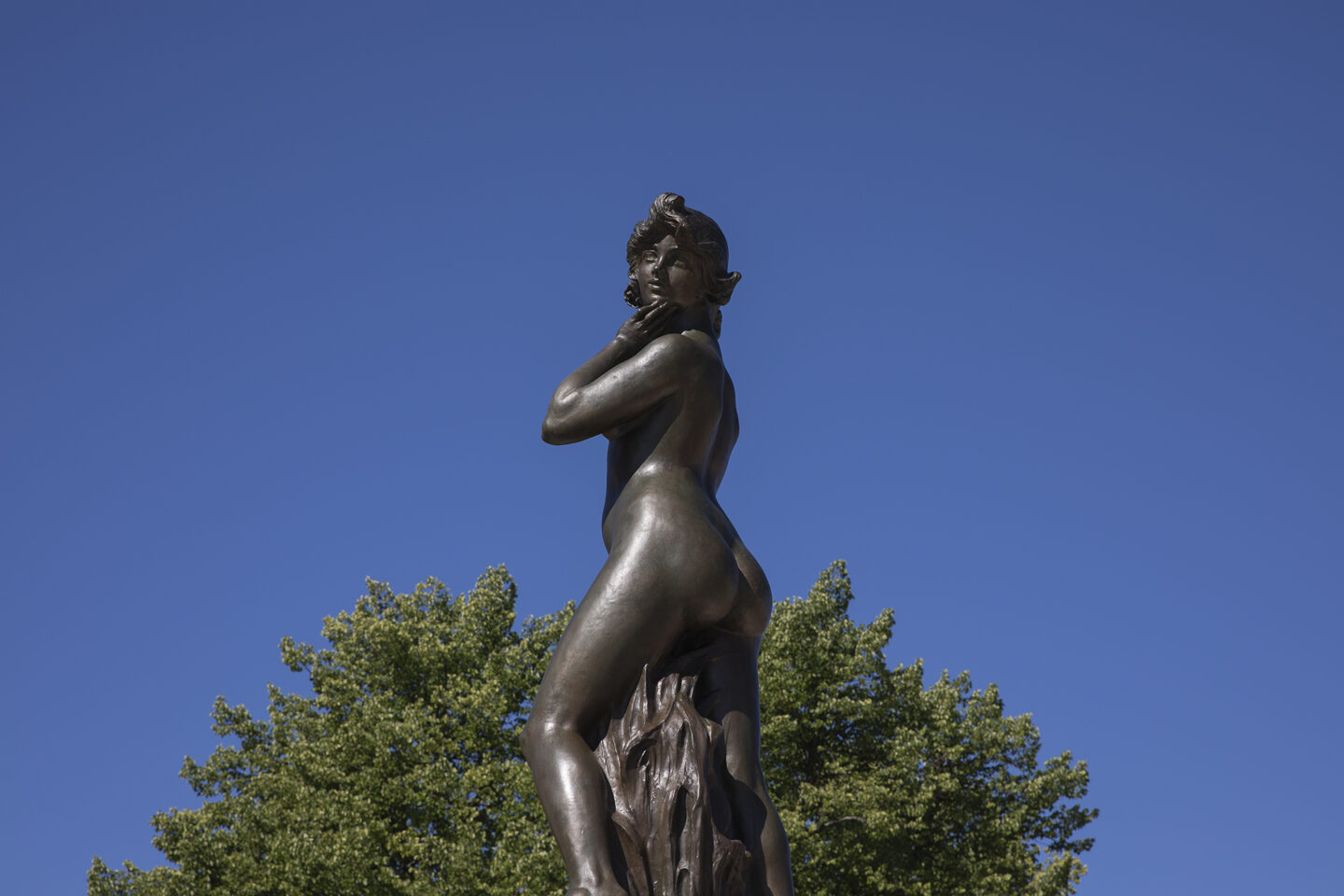
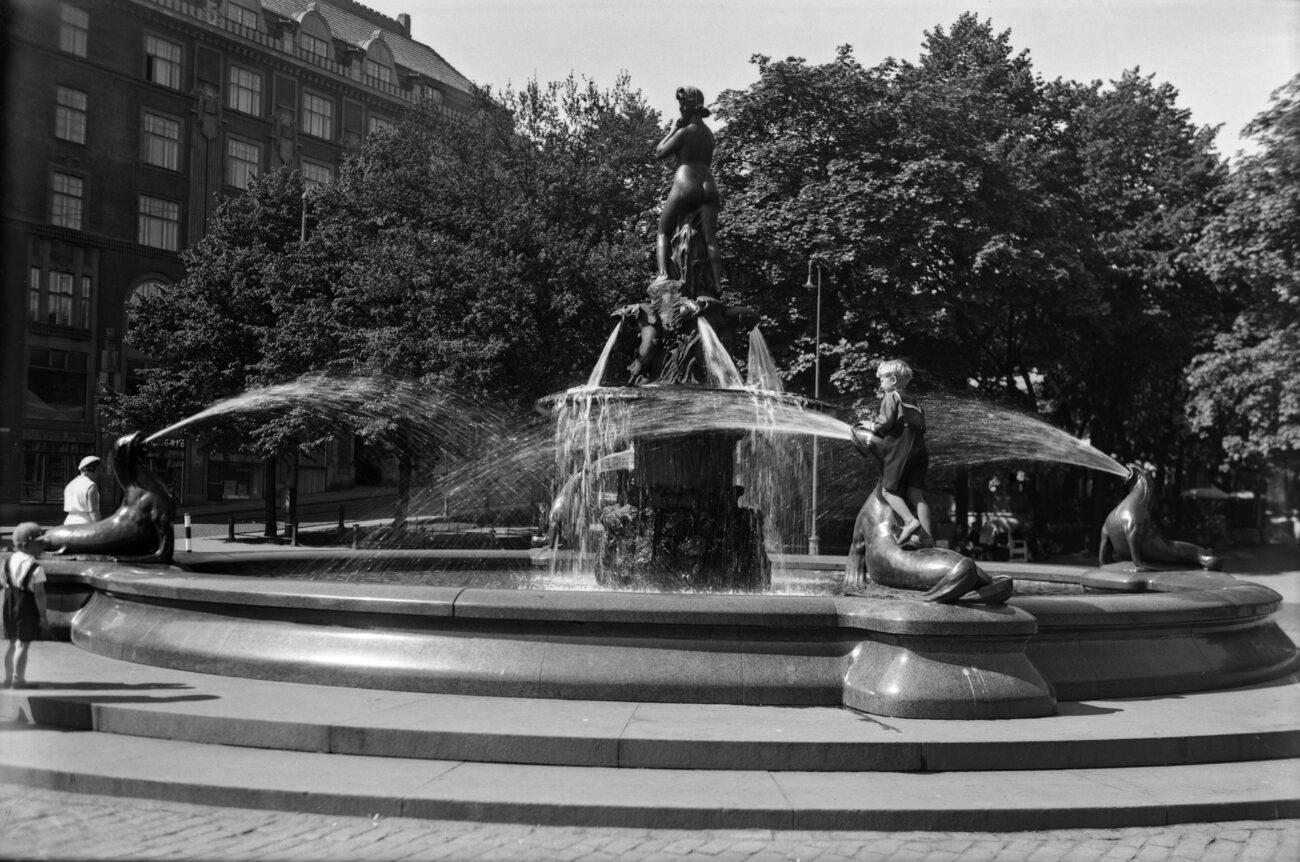
Havis Amanda, Helsinki’s beloved landmark, has been a part of the city’s life since 1908. The work belongs to the City of Helsinki’s art collection, which is managed and curated by HAM.
The Havis Amanda fountain was unveiled in Helsinki’s Market Square in 1908, and is the best-known work of sculptor Ville Vallgren (1855–1940). The piece came about as the result of a desire to raise the profile of Helsinki as Finland’s capital by commissioning a piece of public art from Vallgren, who lived in Paris at the time. The fountain was unveiled with minimal fanfare, but it soon became the source of major public controversy, due to both the ‘indecent female form’ and the lack of understanding of art amongst the public. Despite its tempestuous start, Havis Amanda has since become one of Helsinki’s best loved public sculptures, and a symbol of this maritime city. It now forms part of HAM’s public art collections.
Havis Amanda constantly captivates passers by. Whom was the statue modelled on? Where does the name come from? How did Manta, as she is affectionately known to locals, become a key part of May Day celebrations in Helsinki?
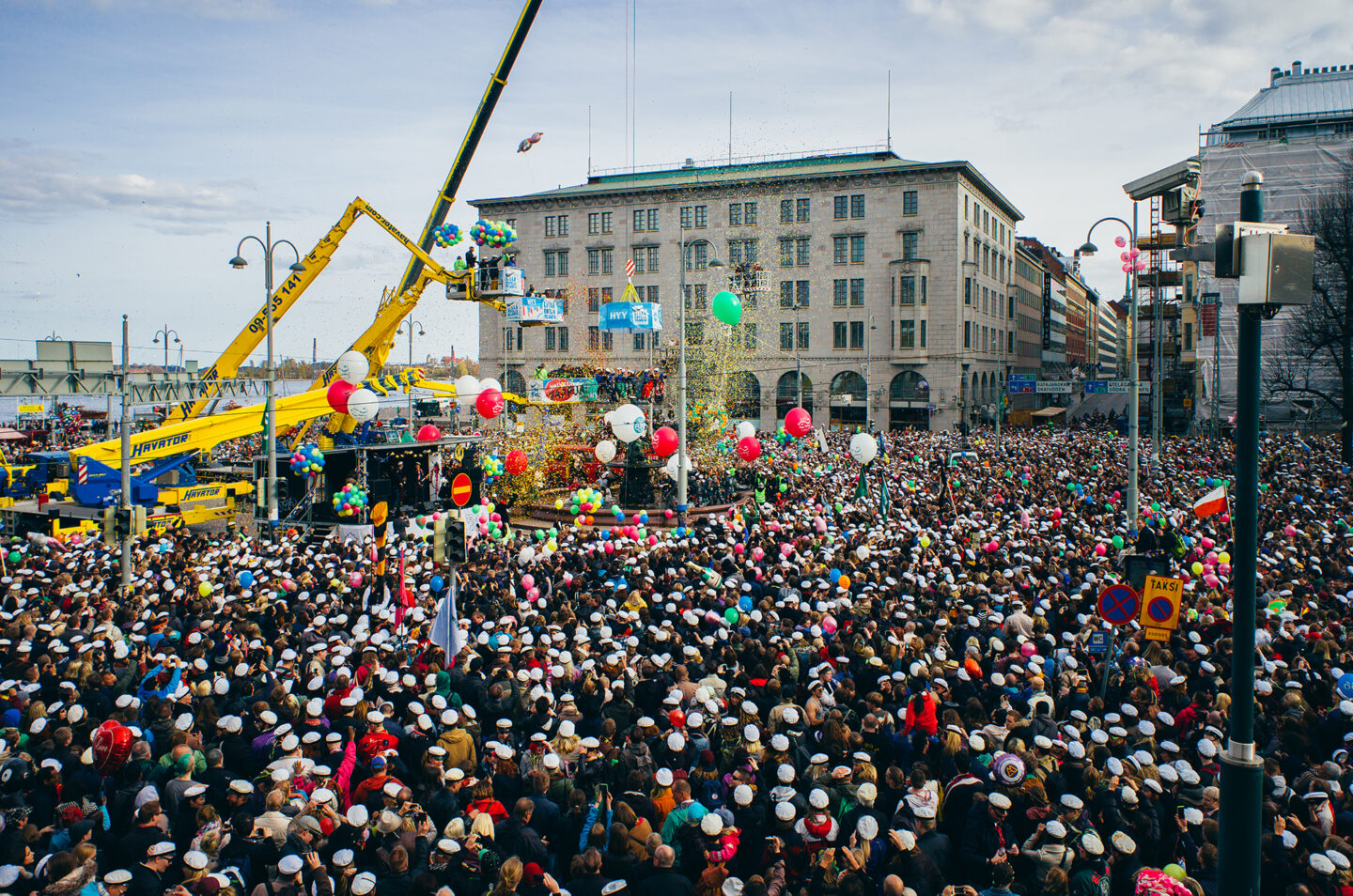
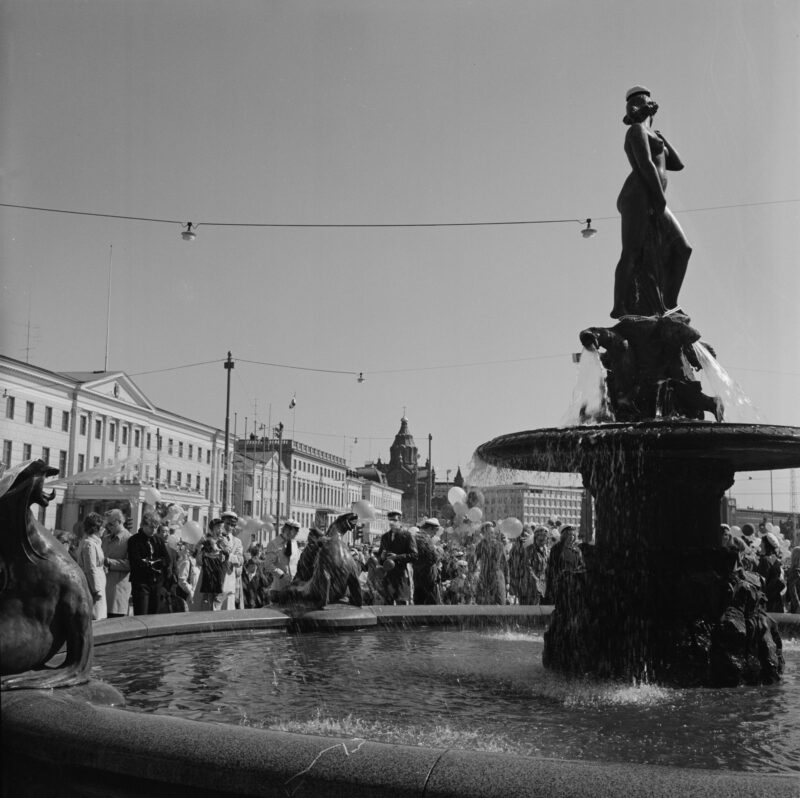
The Manta Student Cap Ceremony
Placing the white student cap on Havis Amanda is a May Day tradition in Helsinki student life dating from the turn of the 19th and 20th centuries. It was the custom for students to don a cap at midnight, on the eve of May Day, in their celebrations at their student unions. The cap would then be worn by the students throughout the summer. The students’ summer season began on May Day.
As it is rumoured, Havis Amanda was already given a cap in 1909. But this was definitely done by 1921, when Ville Vallgren rejoiced that his “daughter” had matriculated. The ceremony has had official status since 1951, being carried out with the approval of the police. In the late 1970s the ceremony time was moved from midnight to 6 p.m. on the eve of May Day.
How a Sea Nymph became the Havis Amanda
Sea nymph, Mademoiselle Helsingfors, Vallgren’s mermaid, Queen of the Sea, Amanda, Manta, Maiden of Helsinki, Fountain Manta, Water-jet Manta, Haaviston Manta… This beloved sculpture has had many names. The name Havis Amanda became established quite soon after its unveiling especially among Swedish-speakers in Helsinki. Vallgren also named the female figure of the fountain Havis Amanda. This most probably comes from the Swedish “Havets Amanda”, meaning ”Amanda of the Sea”. The maritime name suites the statue; already when commissioned the theme of the sculpture was “Helsinki rising from the sea”.
Stories about the name
There are many fascinating stories about the origin of the name Havis Amanda. In the Swedish-speaking coastal regions an old love-song about Amanda and Herman is particularly well-known. The ballad ends with the betrayed maiden Amanda drowning herself. Vallgren, who knew the song from his childhood, observed: “Havis Amanda was a maid when she drowned, but was reborn and raised in rank to become a sea nymph.” There was a rumour that the fountain was an advertisement paid by the Havi soap and candle factory of Viipuri, which in its history made Amanda-soap. This, however, is incorrect, for the fountain had been known as Havis Amanda as early as 1908, yet the Amanda-soap was not produced until the 1920s. The case and wrapper of the soap featured the Havis Amanda statue in relief.
The mystery of the model
Was the model for Havis Amanda a Finnish maid, a professional French model, or perhaps a certain Amanda from Merikatu street in Helsinki? In a memorandum from the 1920, Ville Vallgren wrote that the statue had two different models. Leonie Tavier and Marcelle Delquini were both 19-year-old young ladies of Paris. According to the French population register, Tavier was born in Paris. No official records of Delquini have been found, but the name suggests Italian origin. At the time, it was not uncommon to combine the features of several persons in the same work of art.
Paris, the Birthplace of Havis Amanda
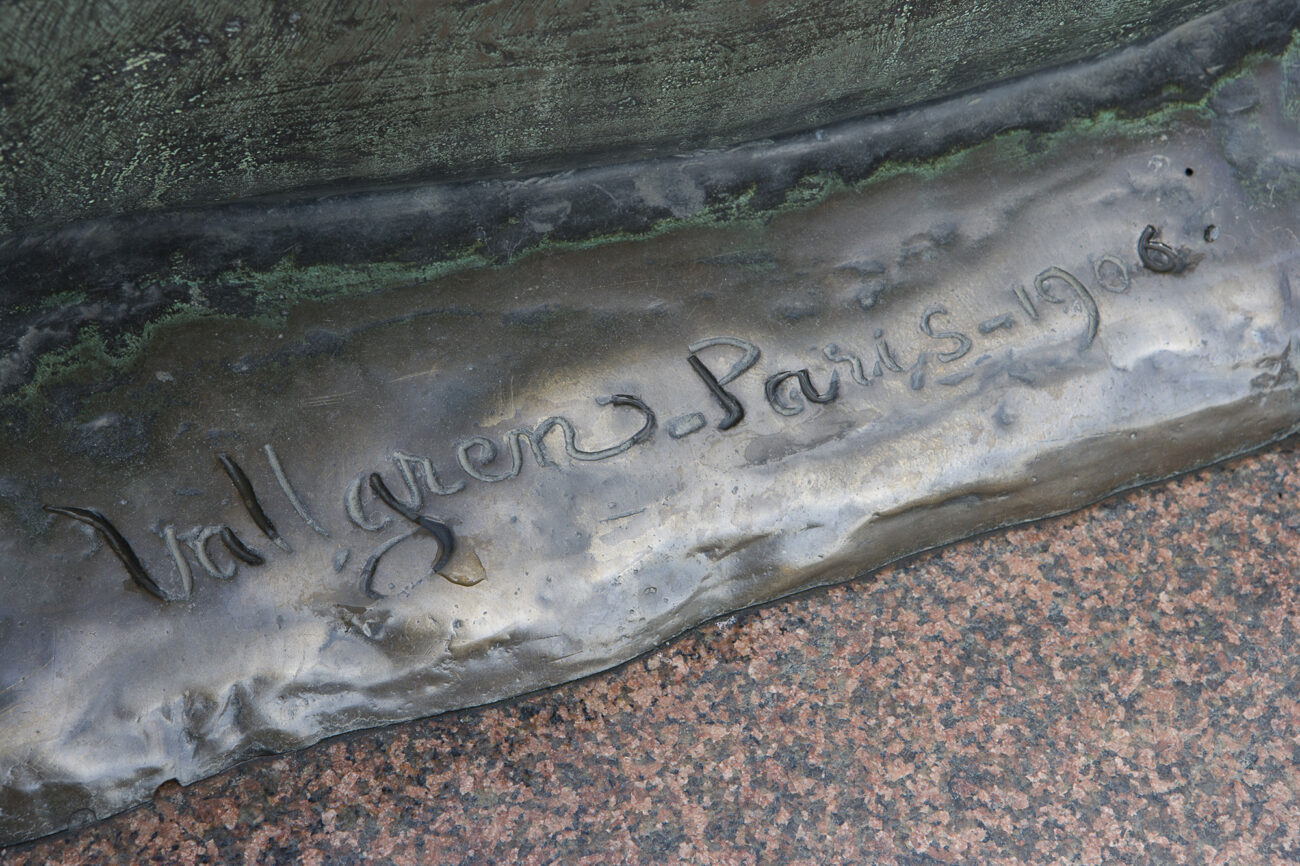
Ville Vallgren moved to Paris from Finland 1877 and lived there for almost forty years. For the longest single period, the artist’s home and studio was located a renowned artists’ quarter near the Arc de Triomphe. Havis Amanda was created at that address, 233bis, rue du Faubourg Saint-Honoré.
Around the same courtyard, Ville and Antoinette Vallgren’s neighbours consisted of tens of artists, most of whom came from the Nordic countries. Vallgren’s studio was at street level, permitting the sculptor the easy delivery of materials. A small apartment and Antoinette Vallgren’s studio were located on the upper floor. The studio was also a venue for an active social life. Ville Vallgren held weekly receptions for his friends and was often seen socialising in Parisian high society circles.
Erottaja or Market Square?
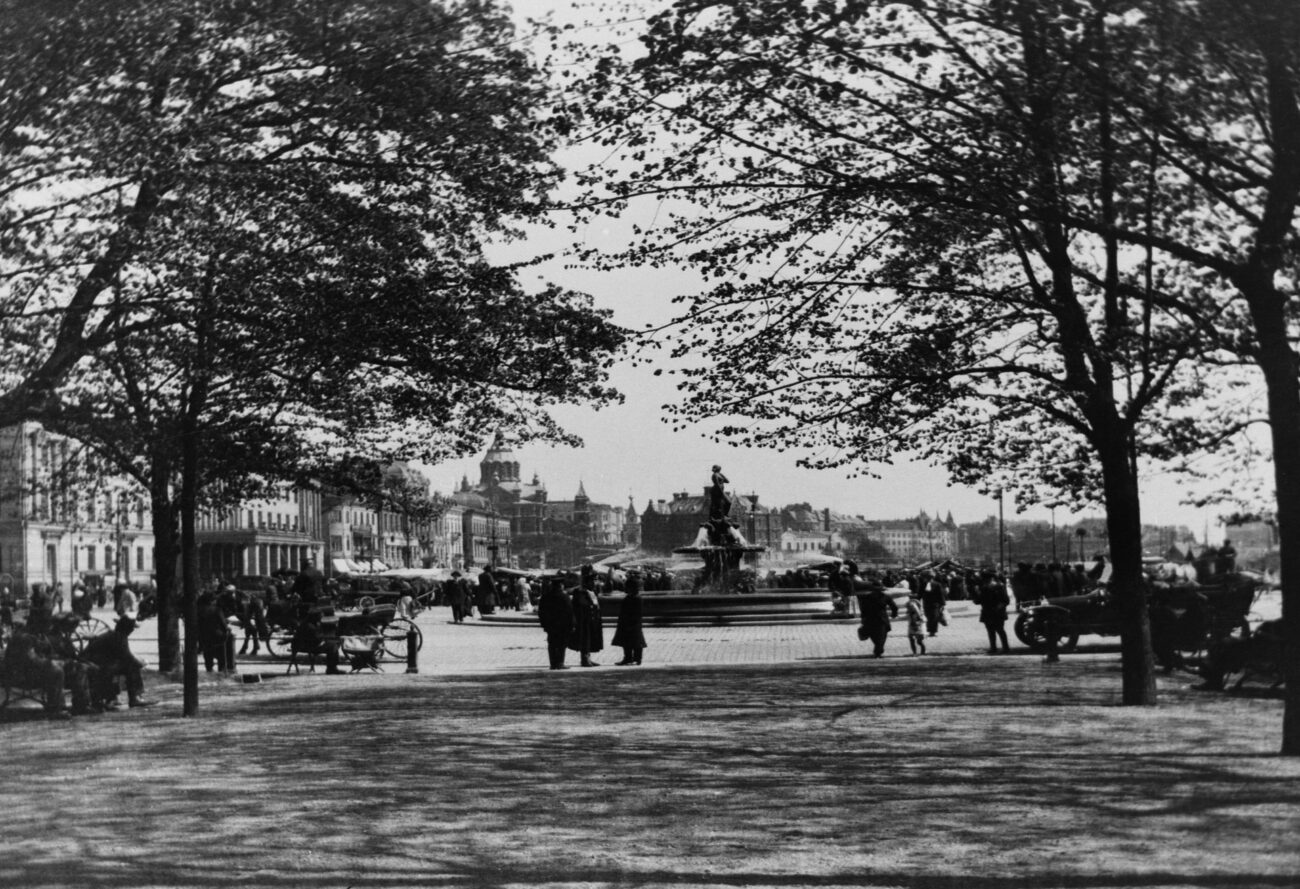
In 1906, a wooden mock-up of the fountain was tested at Erottaja in the city centre near its present location at the west end of the Market Square. Because it was feared that the work would be overshadowed by the tall buildings at Erottaja, the Market Square was chosen as a final location. Other possible locations considered were Katajanokka to the east of Market Square, the forecourt of the House of the Nobility, Esplanade and Tähtitorninmäki hill, the site of the university observatory. The Helsinki City Council consulted a body of experts for choosing the site of the fountain. The expert panel consisted of Ville Vallgren, Professor J.J. Tikkanen, the artist Eero Järnefelt, the architect Eliel Saarinen, Director-General Alexis Gripenberg and Counsellor of State C.G. Estlander.
Finland’s first art debate
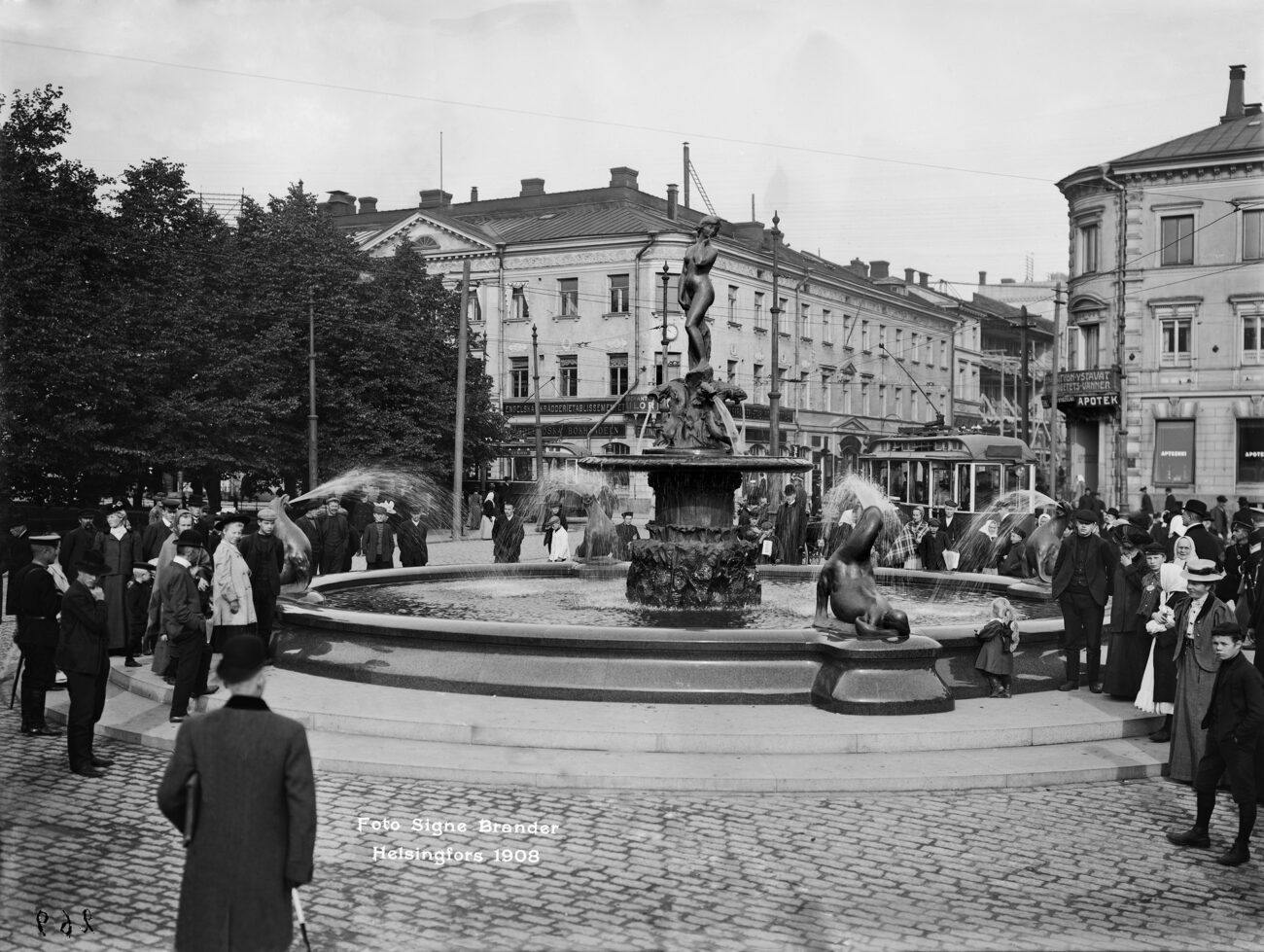
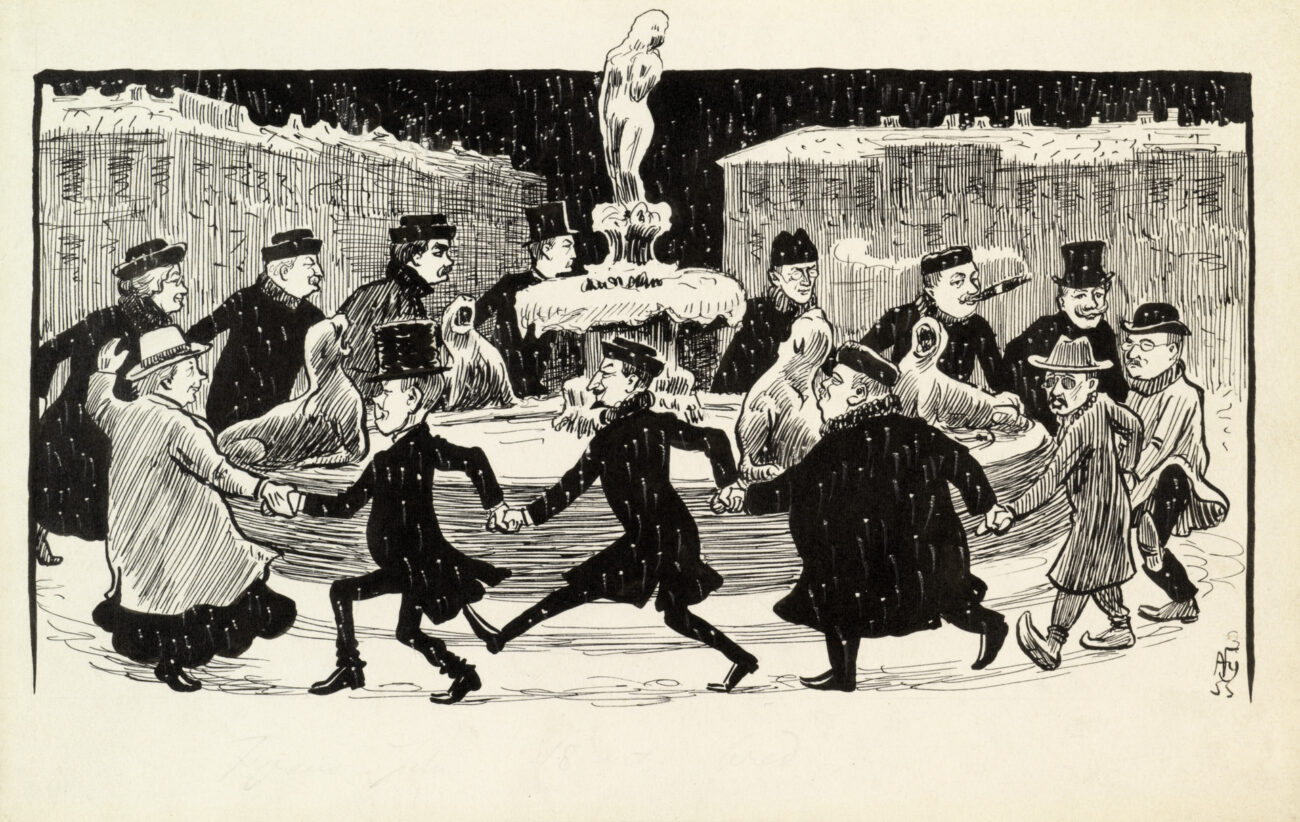
Vallgren’s fountain was unveiled at the Market Square on 20 September 1908. The inauguration took place early on a Sunday morning, with no publicity or official ceremonies. The unveiling immediately launched Finland’s first public art debate of broader scope. The opposing sides were the women’s rights movement and the male art elite, as well as the general public vs. experts, the working class vs. “bourgeois spendthrift culture” and even the Finnish and Swedish speaking educated classes debated against each other. The nudity of the female figure was particularly disapproved. Vallgren expressed his surprise and offense by the uproar in a letter to the Finnish press from Paris. “It is a sea nymph rising from the waves. It is self-evident that she has to be naked under such conditions.”
The women’s chapter of the Helsinki Finnish Society and the Women’s Rights Association Union expressed their official disapproval of the acquisition of the fountain. They regarded the statue to be “unnatural” and “a lewd figure” arousing indecent thoughts about women among the public in the Market Square. The newspaper Työmies not only noted the “indecent” appearance of the sculpture but also its high cost, which “could have saved many young women of Helsinki prison and the poorhouse”. The pro-Finnish Fennomans opposed the fountain for its “unnational” female subject and animal figures, being “alien in our midst” and “lacking any special Finnish character”. In France, however, Vallgren was specifically praised for the Nordic character of his art.
In Favour of a European Spirit, in Opposition to Backwardness
Among others, the art critic Gustaf Strengell of the Hufvudstadsbladet newspaper responded to criticism from the women’s rights movement. He pointed out that to such a public Vallgren’s “bronze girl” was like pearls cast before swine. The women ultimately lost the debate. Swedish-speaking cosmopolitans supported Havis Amanda from the very beginning. For them, Vallgren’s work represented modern European culture worth striving for. The debate was unofficially ended by the cultural journal Argus, in which twelve leading figures in the arts in Finland expressed their support for the fountain and demanded the work to be assessed on artistic instead of moral grounds.
Comments by contemporary artists on the new fountain at the Market Square / Argus 21, 1908:
I find the fountain as a whole to be a successful work, making a particularly joyous and pleasant impression. The main figure has a vivacious and live appearance.
Eero Järnefelt
The female figure was a pleasant surprise.
Akseli Gallén-Kallela
I am not annoyed by her.
Lars Sonck
To me, Vallgren’s sea-nymph is the nicest and most innocent girl in all Helsinki.
Pekka Halonen
And now they’re shouting: Down with her! They should instead shout: Give us more art!
Eliel Saarinen
Restoration
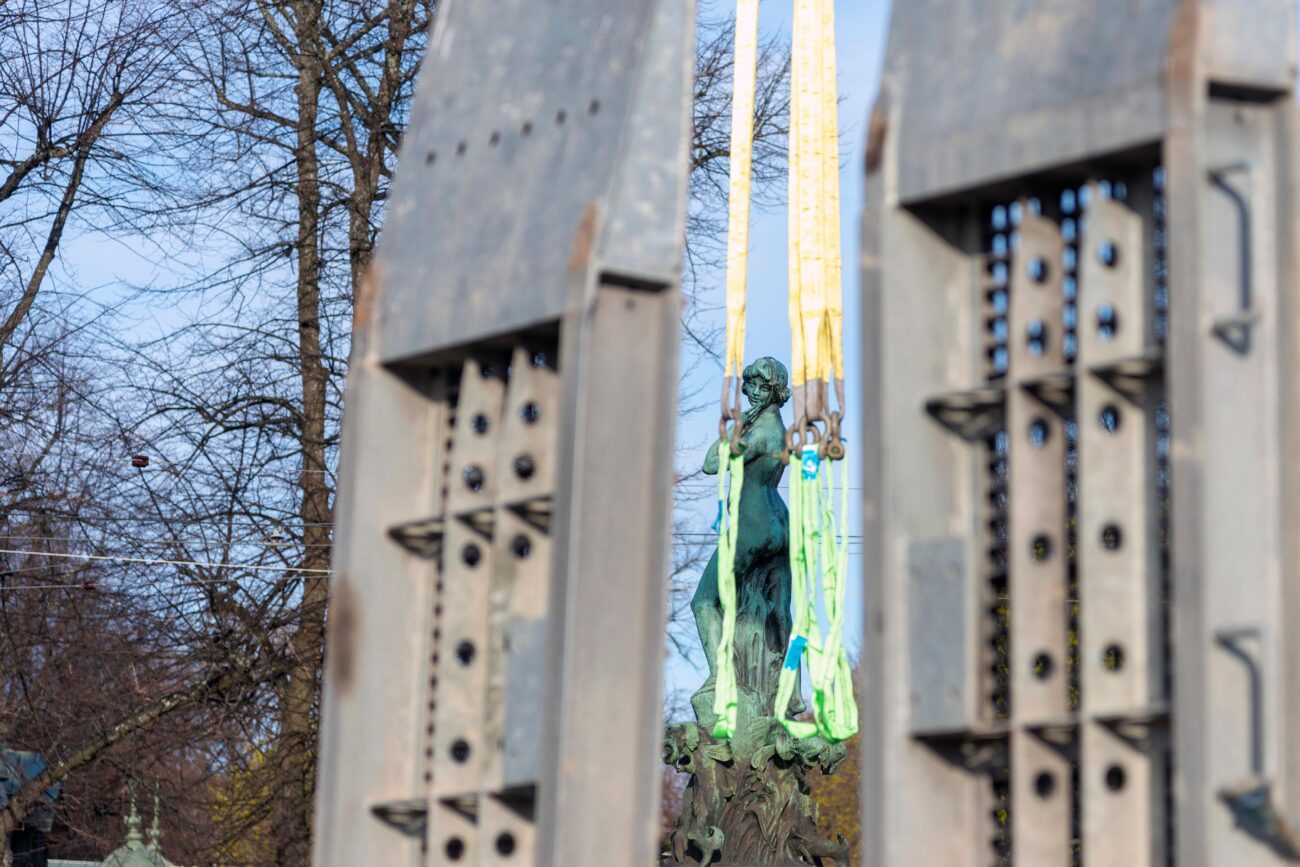
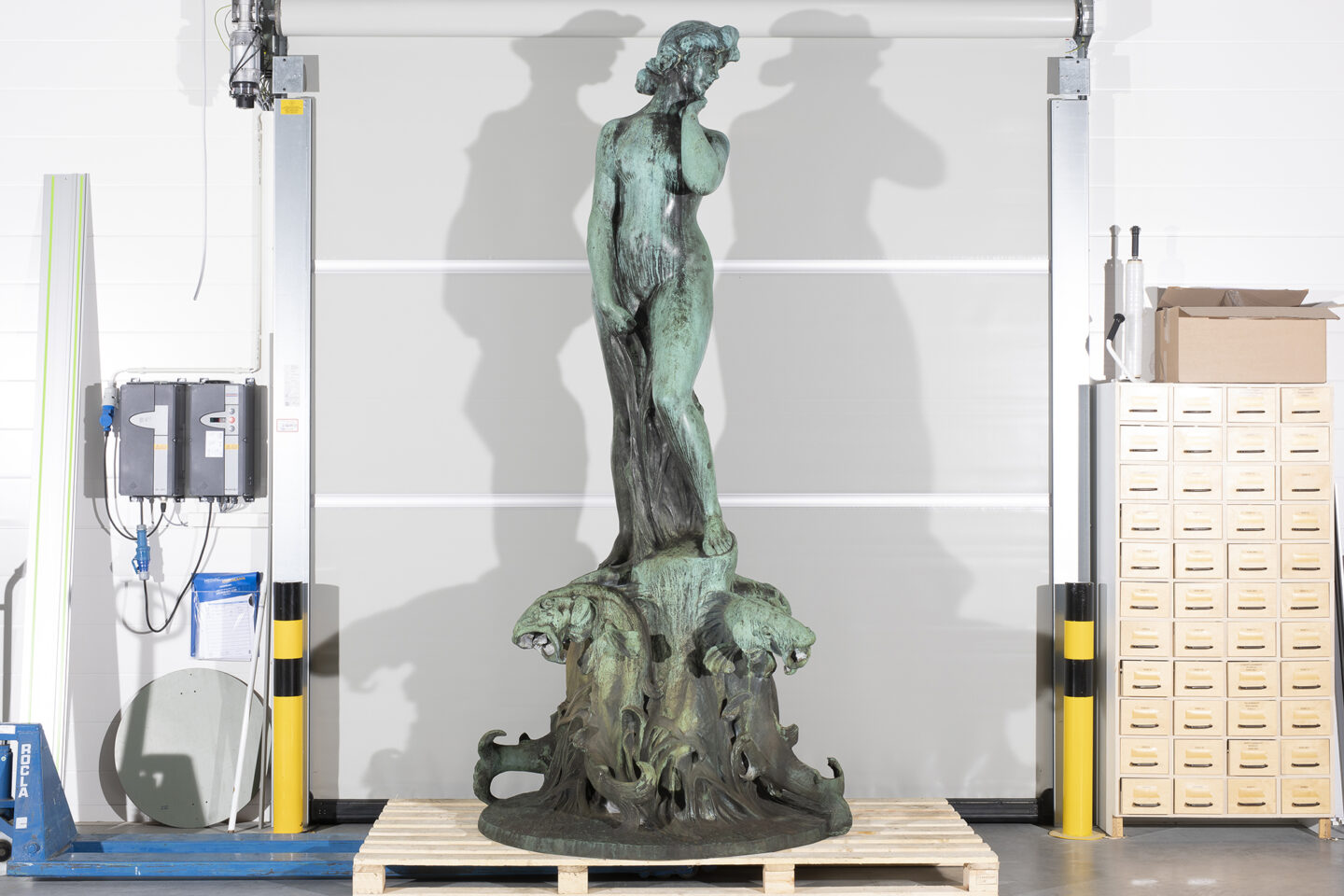
During 2023–24, Havis Amanda underwent a thorough restoration. The bronze artwork had been put through a lot over the years, e.g. during various public celebrations that prompted people to climb onto it. The salty and windy marine climate had also worn the surface of the sculpture.
As part of the restoration process, the structure of the sculpture was reinforced, and all tears and holes were patched up by brazing. The seams of the bronze upper basin of the fountain were also reinforced by welding. However, the century-old sculpture cannot withstand people climbing onto it.
The surface restoration process involved removing the layers of dirt, air pollution and calcification that had accumulated on the surface of the sculpture over a century. The blue-green patina was also tidied up in order for the details of the sculpture to be more prominent. At the end of the process, the surface of the sculpture received a layer of protective wax.